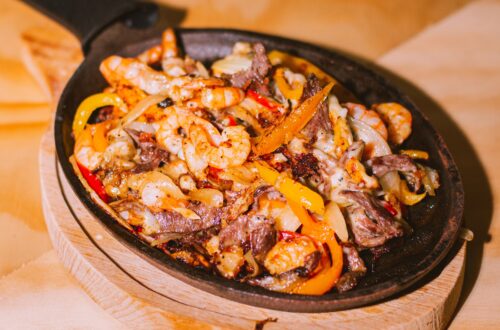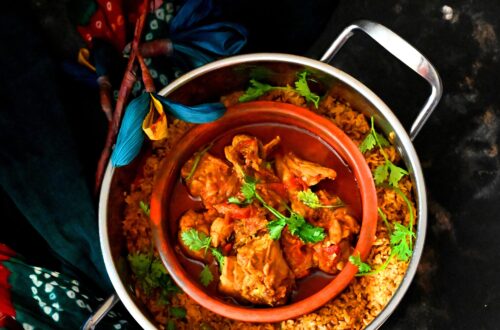
The refrigerated section of most grocery stores puts tempeh and tofu side by side, which does neither of them any favors. Shoppers in a hurry grab whichever one they recognize, cook it the way they cooked the last one, and wonder why the texture never quite works. The confusion is understandable. Both are made from soybeans. Both are protein-rich. The similarity stops there, and treating them as interchangeable is the single most common reason plant-based cooking disappoints.
This is a guide to what each one actually is, how each one behaves in a pan, and when each one earns its place in a real meal.
What Tempeh Actually Is
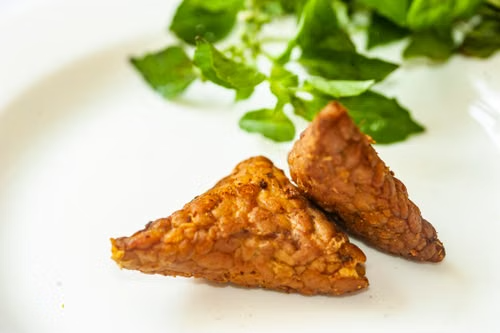
Tempeh starts as whole, cooked soybeans that are packed together and inoculated with a mold culture typically Rhizopus oligosporus then left to ferment for a day or two. The mold binds the beans into a firm, dense cake. What you pull out of the package looks almost like a compressed grain bar: you can see the individual beans, slightly puffed, held together by a thin white mycelium. The smell is earthy. Nutty, even. Some people catch a faint mushroom quality.
That fermentation does something important beyond the smell. It breaks down phytic acid in the soybeans, which makes the protein and minerals more available to the body. Tempeh is also notably higher in dietary fiber than tofu, because the whole bean is used, skin and all. And because it’s already firm and relatively dry, tempeh doesn’t need pressing, draining, or any of the pre-cook prep that tofu demands. You open the package and it’s ready.
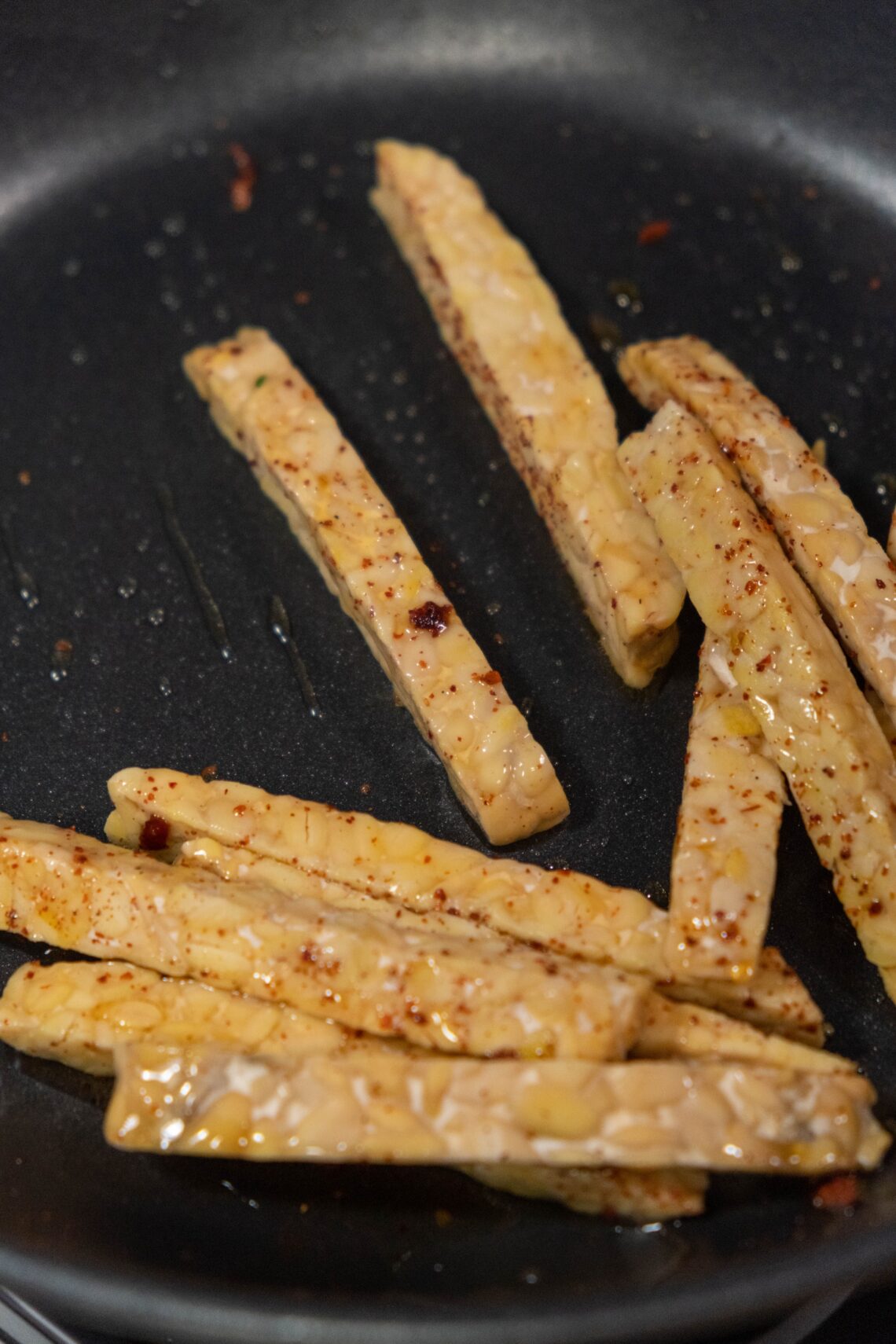
In the pan, tempeh browns fast and holds its shape under real heat. Slice it thin and it crisps. Cube it and it develops a crust on each side without turning to mush. Crumble it and it takes on the look and bite of coarse ground meat, useful in tacos, pasta sauces, grain bowls. It absorbs marinades willingly, though the surface doesn’t soak them up the way tofu does; it’s dense enough that a longer soak (thirty minutes to a few hours) makes a genuine difference.
The flavor is forward. Some people find it slightly bitter raw or barely cooked, a quick steam before marinating mellows that. But fully cooked, with a good sear, tempeh has a nutty, savory depth that doesn’t disappear into the dish. It stands up.
What Tofu Actually Is
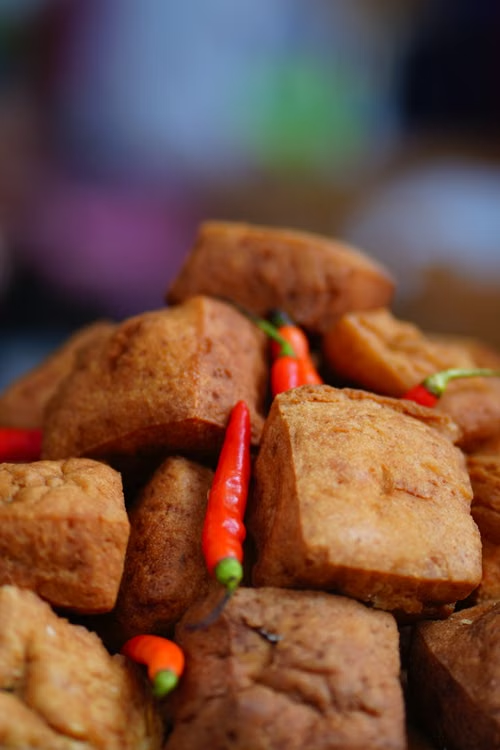
Tofu takes a different path from the same starting point. Soybeans are soaked, ground, and cooked into a milk, which is then curdled using a coagulant, either a mineral salt like calcium sulfate or nigari (magnesium chloride). The curds are pressed into blocks, and the result is tofu: smooth, white, and almost entirely without a distinct flavor of its own.
That neutrality is a feature, not a flaw. Tofu is one of the great absorbers in cooking. Press out the water, and it takes on whatever surrounds it, soy sauce, ginger, chili, garlic, a smoked paprika marinade. The pressing matters because water and heat don’t cooperate; a wet block of firm tofu put into a hot pan will steam instead of sear, and you’ll end up with something pale and soft when you wanted something golden.
Tofu comes in several textures, and the distinctions are practical. Silken tofu is custardy and fragile, it belongs in smoothies, soups, and desserts where you want something to dissolve into the dish or contribute a creamy body without dairy. Soft tofu works in miso soup and scrambled preparations. Firm and extra-firm tofu hold their shape in stir-fries and curries, provided they’ve been pressed first. And high-protein or super-firm tofu (sometimes labeled “high-protein,” sold already drained) skips the pressing step entirely and behaves almost like meat straight from the package.
The texture range is the reason tofu shows up in more places. It’s quieter than tempeh. It blends. A bowl of miso soup with silken tofu is a completely different culinary object than a plate of seared extra-firm tofu with sesame and scallion, but both are tofu.
When to Use Each One
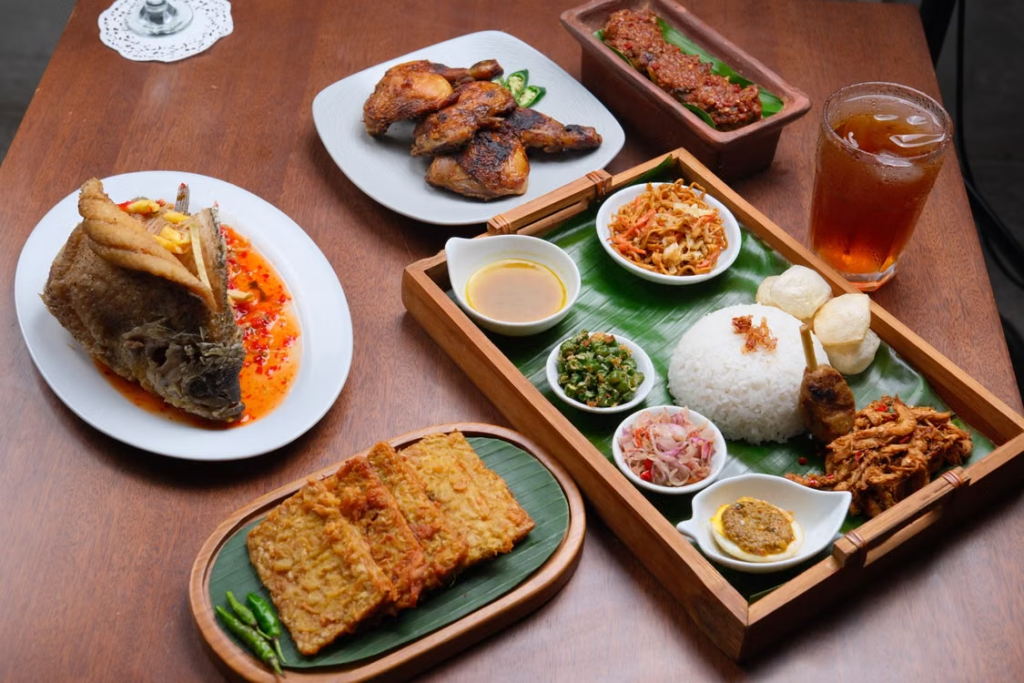
The decision comes down to three questions: Do you want the protein to lead the dish or support it? Do you want texture or softness? And how much time do you have?
Reach for tempeh when the protein is the point. A tempeh BLT, a bowl of marinated tempeh over rice, tempeh crumbles in a tomato sauce, these are dishes where the soy component carries flavor and structure. Tempeh is also the better call for high-heat cooking: grilling, roasting, pan-frying where you want real browning. It doesn’t fall apart. And because it doesn’t need draining or pressing, it’s genuinely faster when you’re working on a weeknight.
Reach for tofu when you want something that integrates into a dish rather than anchoring it. Silken tofu in a Thai coconut curry. Firm tofu cubed into a stir-fry where the sauce is doing the flavor work. Scrambled soft tofu with turmeric and black salt, which gives it a faint sulfur quality that recalls eggs. Tofu is also the right call for dishes that need to be mild enough for people who are new to plant-based cooking, it’s approachable in a way that tempeh, with its earthy bite, sometimes isn’t.
One more thing worth knowing: they handle moisture differently in storage. Open tempeh keeps well in the refrigerator for a few days; cooked tempeh holds up well for several more. Open tofu should be stored submerged in fresh water, changed daily, and used within a few days of opening. The water-storage step is one most cooks skip until they open a block that smells off.
The Substitution Question
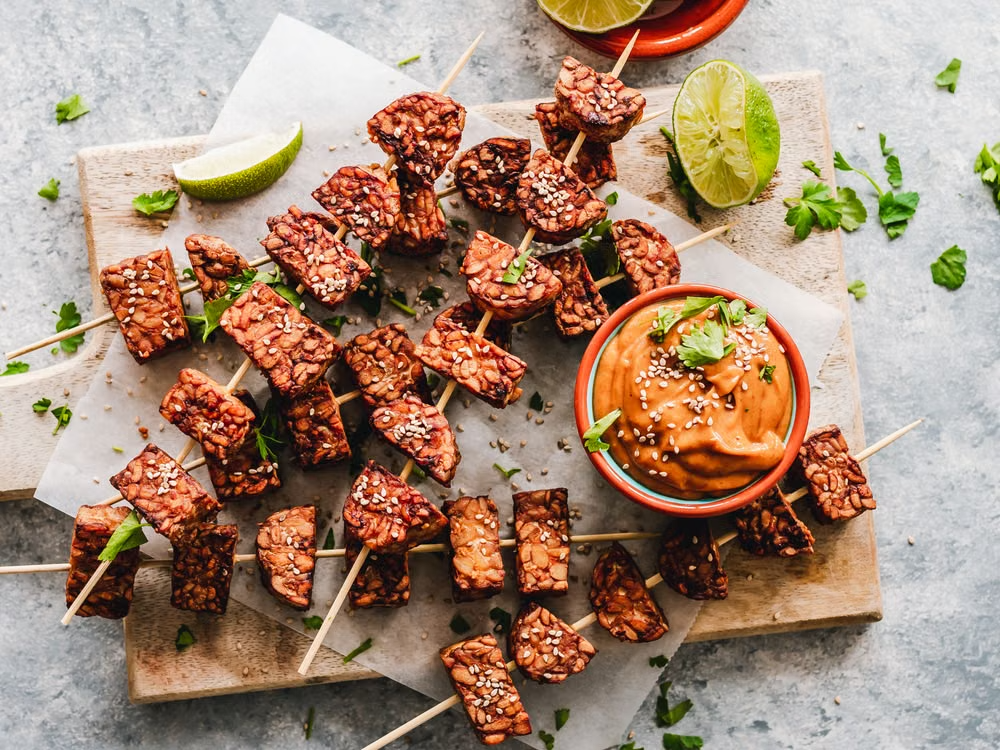
Cooks sometimes swap one for the other in recipes, and occasionally it works. Crumbled tempeh can replace extra-firm tofu in a scramble, and the result is heartier, more chew, more flavor. Firm tofu cubed and well-pressed can stand in for tempeh in a stir-fry, though it won’t brown quite as aggressively and will need a longer marinade to develop comparable flavor.
Where the substitution fails is in applications that depend on texture in a specific way. You cannot use tempeh in a silken tofu chocolate mousse. You will not get the right result from tofu in a recipe that calls for tempeh slices grilled over direct heat. The underlying structures are too different.
The most useful thing to keep both in your refrigerator is the cooking flexibility. Tempeh on a Wednesday when you want something substantial and fast. Silken tofu on a Sunday when you’re making soup and want something delicate and quiet. They’re two different tools that happen to share a shelf.
Sources
Background on fermentation process, nutritional profile, and culinary uses
Background on coagulants, tofu varieties, and texture classifications
This article was created with AI assistance and reviewed for clarity and accuracy.