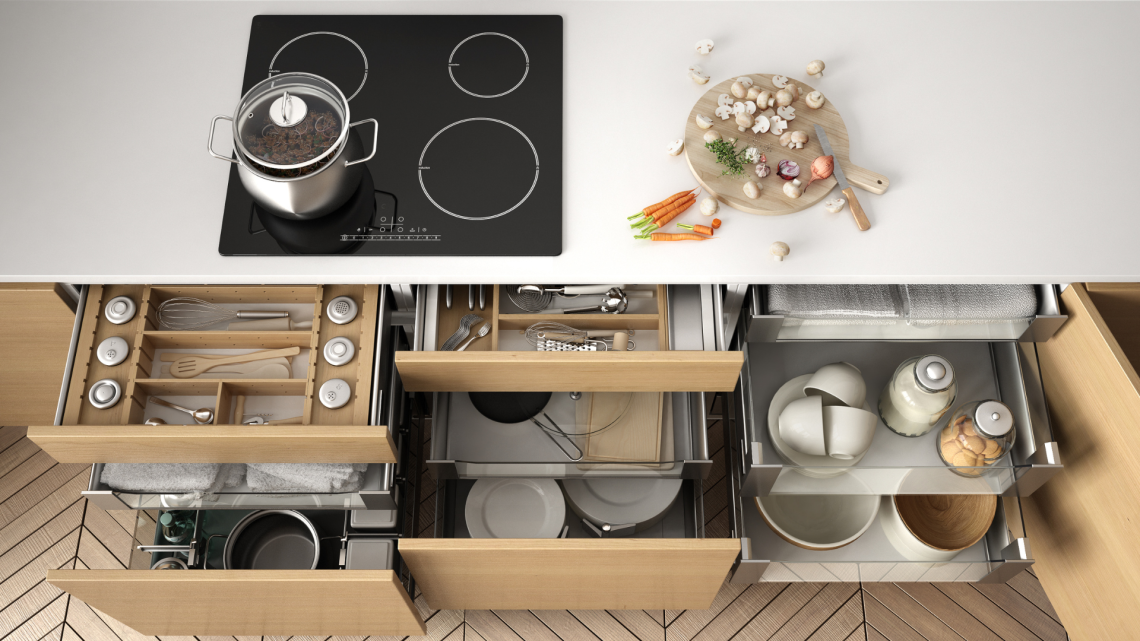
Kitchen tools are meant to make cooking easier, yet many of them sit untouched for months or even years. Drawers fill up, cabinets get crowded, and somehow the same few tools are used over and over while the rest fade into the background. I see this pattern clearly in my own cooking habits. The difference between a tool that gets used daily and one that gathers dust usually has nothing to do with quality and everything to do with storage.
Tool storage shapes behavior more than most people expect. If a tool is awkward to reach, hidden behind other items, or stored far from where it is used, it slowly disappears from routine cooking. Storing tools so they are actually used requires intention, honesty about habits, and a willingness to design storage around reality instead of aspiration. Once storage aligns with how cooking really happens, forgotten tools suddenly earn their place again.
Tools Follow Visibility, Not Intention
Good intentions do not guarantee usage. I can plan to use a mandoline or mortar regularly, but if I cannot see it, that plan rarely survives a busy day. Tools that stay visible naturally come to mind when cooking. Visibility acts as a reminder without effort.
When tools are hidden in deep cabinets or stacked behind other items, they vanish from awareness. Storing tools in plain sight, even if not perfectly arranged, increases the chance they will be used. The brain reaches for what it sees first.
Frequency Should Dictate Placement
Not all tools deserve equal access. Tools used daily should live in the most accessible spots. Rarely used tools can afford to sit farther away. I organize storage based on how often each tool is used, not how expensive or impressive it looks.
This approach prevents frustration. Daily tools are never buried, and occasional tools do not compete for prime space. Cooking feels smoother because storage reflects actual habits rather than ideal ones.
Proximity Matters More Than Aesthetics
A tool stored far from where it is used is less likely to be used at all. Knives belong near prep space, not across the kitchen. Utensils should sit close to the stove, not tucked into decorative drawers.
I notice how often I abandon an idea simply because a tool feels inconvenient to retrieve. Storing tools near their point of use removes that barrier. Convenience drives behavior far more than aesthetics ever will.
Drawers Encourage Use When Organized Well
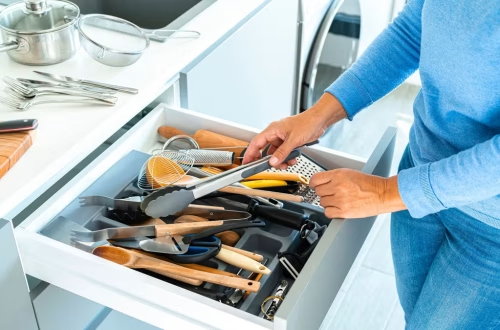
Drawers can either hide tools or make them easier to access than cabinets. The difference lies in organization. Shallow drawers with clear dividers allow tools to sit in a single layer, visible at a glance.
When tools are stacked or piled, drawers become black holes. I organize drawers so each tool has its own space. This clarity makes reaching for the right tool effortless, which increases usage naturally.
Vertical Storage Keeps Tools in Sight
Vertical storage changes how tools interact with daily cooking. Standing tools upright makes them visible and easy to grab. I rely on containers, rails, and magnetic strips to keep tools accessible without cluttering surfaces.
This setup works especially well for utensils, knives, and frequently used gadgets. Tools become part of the cooking environment instead of hidden objects. Usage increases simply because access is immediate.
Wall Storage Turns Tools Into Invitations
Tools stored on walls feel like invitations rather than obstacles. Hanging tools create visual prompts that spark ideas. Seeing a whisk or ladle reminds me of techniques and dishes I might otherwise skip.
Wall storage also frees up drawer and cabinet space. The kitchen feels more open, and tools feel integrated into the workflow. When tools feel present, they feel usable.
Cabinet Depth Discourages Regular Use
Deep cabinets often hide tools behind layers of other items. Reaching into them feels like a commitment rather than a quick action. I notice hesitation whenever a tool requires rearranging other items first.
Shallow shelves or pull-out racks solve this problem. Tools slide into view instead of requiring excavation. When access feels easy, usage follows without resistance.
Tool Grouping Reinforces Habits
Grouping tools by task makes cooking feel more intuitive. Prep tools belong together, baking tools share space, and cooking utensils live near heat. This organization mirrors how the brain thinks during cooking.
I reach for grouped tools without thinking. The process feels fluid because everything needed for a task appears together. Tools get used because they support momentum rather than interrupt it.
One Motion Access Changes Behavior
Tools that require multiple steps to retrieve are used less often. Opening a cabinet, moving items, and then reaching deep into storage creates friction. I store frequently used tools so they can be accessed in one motion.
This small change has a big impact. One motion feels effortless, while multiple steps feel like work. Tools that feel effortless become part of daily cooking.
Size Matters More Than Expected
Oversized tools often go unused because they are hard to store. Large mixers, processors, or pans require effort to retrieve and put away. If storage does not accommodate their size comfortably, usage drops.
I make sure large tools have dedicated, easy-access storage. When they fit naturally into the space, they feel usable instead of burdensome. Storage should adapt to tools, not fight them.
Storing Tools Assembled Increases Use
Tools that need assembly before use create hesitation. Retrieving multiple parts slows momentum. I store tools assembled whenever possible so they are ready to use immediately.
This approach works especially well for hand tools and small appliances. When a tool feels ready, it feels inviting. Usage increases because the barrier to entry disappears.
Removing Duplicates Clarifies Choices
Too many similar tools create decision fatigue. Choosing between multiple spatulas or peelers slows action. I reduce duplicates unless each serves a clear, distinct purpose.
With fewer options, decisions become faster. The right tool becomes obvious. Usage improves because the brain is not distracted by unnecessary choice.
Tool Rotation Keeps Storage Honest
Some tools fall out of use simply because habits change. I periodically review tool storage and adjust placement based on recent behavior. Tools used often move forward, while unused ones move back.
This rotation keeps storage aligned with reality. Tools earn their spot through use, not intention. The kitchen stays responsive to how cooking actually evolves.
Drawer Dividers Protect Visibility
Loose drawers hide tools beneath one another. Dividers prevent overlap and keep tools visible. I choose dividers that fit tools closely without squeezing them.
This structure saves time and reduces frustration. Tools are seen instantly rather than searched for. Visibility encourages use without conscious effort.
Counter Storage Should Be Intentional
Counter storage increases visibility but can create clutter if overdone. I reserve counter space for tools used daily. Anything less frequent moves elsewhere.
This balance keeps tools accessible without overwhelming the workspace. The kitchen feels functional rather than crowded. Daily tools stay within reach, which keeps them in regular use.
Labeling Helps With Multi-Purpose Tools
Multi-purpose tools often get lost because their function is not immediately obvious. Labels or clear placement help remind me what they are for. This clarity increases usage.
When tools communicate their purpose visually, hesitation disappears. The brain connects tool to task instantly. Usage improves because uncertainty is removed.
Storage Should Match Handedness
Handedness affects how tools are used. I store tools on the side of the kitchen that feels most natural for reaching. This subtle adjustment improves comfort and speed.
Tools that feel awkward to reach are used less often. Storage that respects physical habits increases usage effortlessly. The kitchen feels tailored rather than generic.
Cleaning Ease Influences Tool Use
Tools that are hard to clean are often avoided. Storage plays a role here. I store tools so they can be cleaned and returned easily without rearranging storage.
When cleanup feels simple, tools feel less intimidating. Usage increases because the entire process feels manageable. Storage supports the full lifecycle of tool use.
Tool Storage Affects Creativity
Creativity relies on access. Tools that are easy to reach invite experimentation. I notice more creative cooking when tools are visible and accessible.
Hidden tools limit options. Accessible tools expand them. Storage shapes creative behavior quietly but powerfully.
Small Adjustments Create Big Shifts
Major overhauls are not necessary to improve tool usage. Small changes, such as moving one tool closer or clearing a drawer, create immediate results. Each adjustment reinforces the next.
Over time, the kitchen becomes more intuitive. Tools feel like natural extensions of cooking rather than obstacles. Usage improves without effort.
Storage Should Serve the Cook, Not the Collection
Tools are not trophies. They exist to be used. I store tools based on usefulness, not appearance or cost.
This mindset keeps storage practical. Tools that earn their place stay accessible. Others step aside.
Habits Matter More Than Ideal Setups
Perfect storage systems fail if they do not match habits. I store tools where my hands naturally reach, not where design rules suggest. Reality always wins.
When storage matches behavior, tools get used. The kitchen adapts to the cook rather than demanding adaptation. Usage becomes effortless.
Final Thoughts
Storing tools so you actually use them requires honesty about habits and respect for convenience. Visibility, proximity, and ease of access matter more than aesthetics or tradition. Tools follow behavior, and behavior follows storage.
A well-stored tool feels ready, inviting, and natural to use. When storage supports how cooking truly happens, forgotten tools return to daily life. The kitchen becomes more functional, creative, and enjoyable simply by placing tools where they belong.