
Confidence rarely appears out of nowhere. It builds quietly through repetition, small wins, and moments where effort turns into something tangible. Cooking offers that exact process in a way few daily activities do, and it does so without needing permission, validation, or a special setting. A kitchen becomes a private space where progress is visible, mistakes are allowed, and improvement is unavoidable if I keep showing up.
Cooking puts me in direct contact with cause and effect. I decide what to do, I do it, and I see the results on the plate. That clear feedback loop is powerful, especially in a world where results are often abstract or delayed. Over time, that loop changes how I see my own abilities, not just in the kitchen but far beyond it.
Confidence Grows Through Repetition, Not Perfection
Cooking rewards repetition more than talent. The first time I cook a dish, it often feels clumsy and slow, even if I follow the recipe carefully. The second and third attempts feel different because my hands remember what my head struggled to process the first time. That gradual shift from uncertainty to familiarity builds a quiet kind of confidence that sticks.
Repetition removes fear by replacing it with experience. Chopping vegetables stops feeling intimidating once I’ve done it dozens of times. Heat control stops being mysterious after enough meals cooked on the same stove. Each repeated task becomes proof that improvement is possible, which reinforces trust in my ability to learn.
Perfection never becomes the goal in this process. What matters is showing up again and doing the work with slightly more ease than before. That mindset spills into other areas of life, where confidence also comes from consistency rather than flawless performance.
Making Decisions Builds Self-Trust
Cooking requires constant decision-making. Even with a recipe in front of me, I still decide how finely to chop, how hot the pan should be, or when something smells ready. Those small decisions accumulate, and over time I stop second-guessing myself so much. Trust grows because I see that most decisions don’t need to be perfect to work.
Self-trust strengthens when decisions lead to acceptable outcomes. A sauce that is slightly thicker than planned is still edible and often enjoyable. A substitution made out of necessity sometimes becomes an improvement. Those moments teach me that my judgment has value, even when conditions are not ideal.
That confidence transfers outside the kitchen. Decision-making feels less paralyzing when I remember how often imperfect choices still lead to good results. Cooking trains that muscle quietly, meal after meal.
Progress Is Visible and Immediate
Few skills offer such immediate feedback. The transformation from raw ingredients to a finished dish happens in front of me, often within an hour. That visibility makes progress feel real instead of theoretical. I can taste improvement, smell it, and see it on the plate.
Seeing tangible results reinforces effort. Even on days when motivation feels low, completing a meal proves that action still leads somewhere meaningful. That sense of completion is deeply satisfying and boosts confidence in my ability to follow through.
Over time, the gap between effort and reward feels shorter. That short feedback loop trains my brain to associate effort with success, which strengthens confidence far beyond the kitchen walls.
Mistakes Become Less Personal
Cooking normalizes mistakes in a healthy way. Burning garlic, overcooking pasta, or forgetting an ingredient happens to everyone. These mistakes are rarely catastrophic, and they usually come with clear lessons. Instead of feeling like failures, they become data points.
This changes how I relate to errors. A ruined dish doesn’t mean I lack ability; it means something went wrong that can be adjusted next time. That shift removes shame from the learning process and replaces it with curiosity. Confidence grows when mistakes lose their emotional weight.
That perspective becomes valuable in daily life. When mistakes feel less personal, it’s easier to take risks and try new things. Cooking trains that resilience gently, without pressure.
Skill Development Creates Internal Validation
Cooking provides validation without needing external approval. I don’t need praise from others to know when I’ve improved. I can taste the difference, feel the smoother workflow, and notice how tasks take less mental energy. That internal feedback builds confidence from the inside.
External validation can be unpredictable, but internal validation is stable. Cooking strengthens that inner compass by giving me regular evidence of growth. Each improved dish becomes proof that effort matters.
Relying less on external approval shifts how I see myself. Confidence rooted in personal progress feels calmer and more durable than confidence built on opinions.
Familiarity Reduces Anxiety
Uncertainty often fuels anxiety, and cooking reduces uncertainty through familiarity. The more time I spend in the kitchen, the more predictable the process becomes. Sounds, smells, and visual cues start to make sense. That familiarity creates a sense of control.
Feeling in control reduces stress. Knowing how long something takes to cook or how to fix a dish that tastes flat removes panic from the process. Confidence grows because the unknown becomes known through experience.
That sense of calm carries into other routines. Familiar processes feel manageable, and confidence thrives in environments where anxiety is kept in check.
Mastery Feels Earned, Not Given
Cooking confidence feels earned because it is. No one can cook a meal for me and give me the skill by proxy. Every improvement comes from my own hands and attention. That direct relationship between effort and outcome strengthens self-respect.
Earning mastery creates pride without arrogance. I know how much work went into a dish that turns out well. That knowledge makes success feel legitimate and deserved.
This earned confidence feels grounded. It doesn’t rely on shortcuts or shortcuts in identity. It grows steadily and stays.
Cooking Encourages Independence
Being able to cook reduces dependence on others for a basic human need. That independence builds confidence in a fundamental way. Knowing I can feed myself well under different circumstances creates a sense of security.
Independence changes mindset. Instead of feeling limited by time, money, or availability, I feel capable of adapting. Cooking turns constraints into creative challenges rather than barriers.
That self-reliance reinforces confidence daily. Each meal cooked is a reminder that I can meet my own needs with skill and care.
Creativity Strengthens Self-Expression
Cooking invites creativity without demanding perfection. Adjusting flavors, experimenting with textures, or combining influences allows personal expression. That freedom encourages confidence because creativity thrives when judgment is softened.
Expressing creativity builds identity. A dish starts to feel like mine when I make small choices that reflect my preferences. That sense of ownership reinforces confidence in my taste and instincts.
Creative confidence often starts small. Cooking offers a low-risk environment to explore it, which can unlock confidence in other creative areas.
Consistency Builds Momentum
Confidence grows faster when momentum is present. Cooking regularly creates rhythm and structure. Each completed meal makes the next one easier to start. That momentum reduces hesitation.
Consistency reinforces identity. I stop thinking of cooking as something I attempt and start seeing it as something I do. That shift in self-perception strengthens confidence naturally.
Momentum extends beyond the kitchen. Regular action in one area makes consistent action elsewhere feel more achievable.
Sharing Food Reinforces Confidence
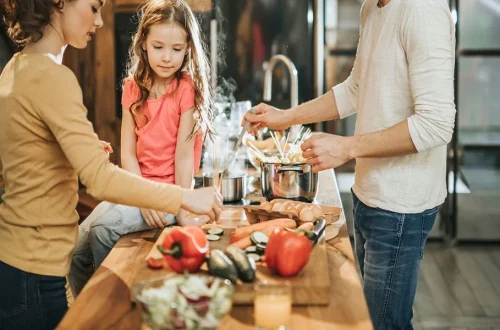
Sharing a meal adds another layer to cooking confidence. Preparing food for others introduces responsibility, but it also creates connection. Positive reactions reinforce belief in my ability to contribute meaningfully.
Even neutral reactions matter. Serving food and seeing it eaten confirms usefulness, which strengthens confidence in a grounded way. Cooking becomes an act of service that feels concrete.
That sense of contribution boosts self-worth. Confidence grows when effort has visible impact on others.
Routine Creates Stability
Cooking as part of a routine adds stability to daily life. That stability supports confidence by reducing chaos. Knowing that at least one part of the day is familiar and productive builds trust in my ability to manage time and energy.
Routines reduce decision fatigue. Familiar meals and processes free mental space, making the kitchen feel supportive rather than demanding. Confidence benefits from that mental clarity.
Stability builds resilience. When other areas feel uncertain, cooking remains a reliable anchor.
Confidence Through Physical Engagement
Cooking is physical, not just mental. Using hands, senses, and movement grounds me in the present moment. That embodiment strengthens confidence by reconnecting me with my capabilities.
Physical engagement reinforces competence. Successfully handling heat, tools, and timing builds trust in coordination and awareness. That trust extends beyond cooking.
Feeling capable in the body supports overall confidence. Cooking quietly nurtures that connection.
Final Thoughts
Cooking builds confidence through action, repetition, and tangible results. It offers a space where mistakes are manageable, progress is visible, and effort leads directly to reward. That combination creates confidence that feels earned and durable.
The kitchen becomes more than a place to prepare food. It becomes a training ground for self-trust, resilience, and independence. Over time, cooking reshapes how I see my abilities, one meal at a time.