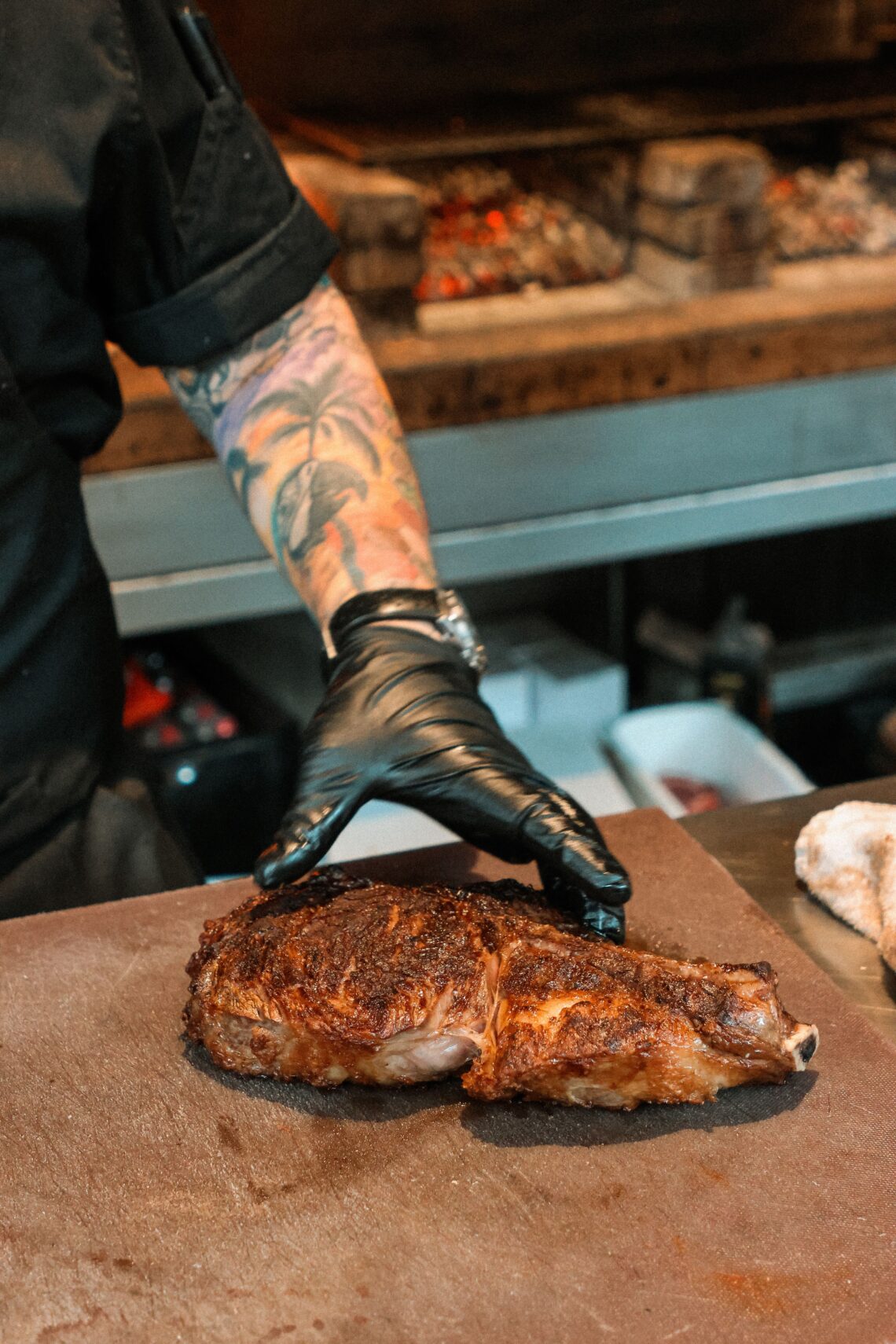
Pull a steak off a screaming-hot cast iron pan, slice it immediately, and watch what happens. A small river of deep red juice runs straight onto the cutting board and pools there, wasted. The meat on your plate is drier than it should be, and you can’t figure out why: you bought a good cut, you cooked it right, you hit the temperature. What went wrong is invisible, and it happened in the thirty seconds after you turned off the heat.
The answer has everything to do with what heat does to muscle fibers. Raw meat holds a lot of moisture; the juiciness we associate with a great steak is mostly water bound up inside the muscle proteins. When you apply high heat, those proteins contract sharply, squeezing toward the center of the meat and pushing liquid out toward the surface. Slice the steak while it’s still hot and at peak contraction, and you release all of that surface moisture at once. It drains onto your board.
Resting gives the fibers time to relax.
And here’s the part most people picture wrong: the juice doesn’t redistribute toward the center the way a lot of recipes describe it. What actually happens is subtler. As the internal temperature equalizes and the outer proteins cool slightly, the muscle fibers loosen their grip. The moisture that was forced outward gets reabsorbed more evenly through the meat. The difference between a rested steak and an unrested one isn’t dramatic on a thermometer; it might be a matter of a few degrees across the cut, but it’s significant at the table. The rested steak holds its moisture when you cut into it. The unrested one gives it all up at once.
How Long the Rest Actually Needs to Be
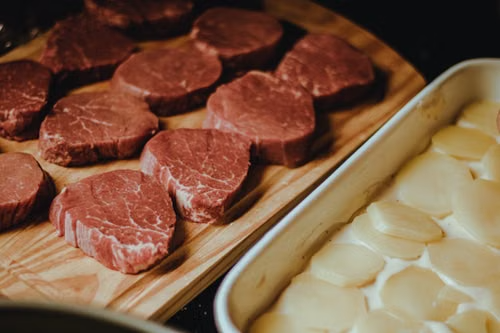
The timing question is where home cooks get the most conflicting advice. Some recipes say five minutes, some say ten, some say “as long as it takes.” The answer depends on the thickness of the cut.
A thin skirt steak or flank, cooked fast and sliced thin anyway, needs only three to five minutes. A one-inch ribeye does well with five to seven. A thick tomahawk or a whole roast is a different situation entirely; the thermal mass is bigger, the contraction runs deeper, and a ten-to-fifteen minute rest is where you start seeing real payoff. The general rule most professional cooks use is roughly one minute of rest per half-inch of thickness, though that’s a starting point, not a law.
One thing worth knowing: carryover cooking doesn’t stop the moment you pull the steak from the heat. The exterior of the meat stays hotter than the center for several minutes, and that heat keeps moving inward. A steak pulled at 125°F will rise another five to eight degrees during rest. This is why pulling a steak slightly earlier than your target temperature is standard practice; the rest finishes the job.
The Tent Question
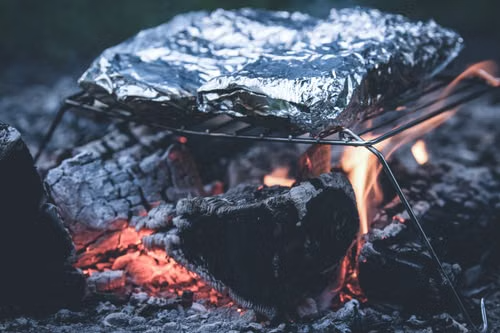
Whether to tent the resting steak with foil is genuinely a matter of tradeoffs, and the answer depends on what you’re optimizing for.
Foil trapping helps the steak retain heat during a longer rest, which matters most for thick cuts or cold kitchens. But the same foil traps steam, and steam is the enemy of crust. A beautiful sear, the browned, slightly crisp exterior that forms when the Maillard reaction runs at high heat, softens quickly under trapped moisture. You spent time building that crust. It would be a shame to steam it away.
For most steaks, a loose tent with a small gap for ventilation is a reasonable compromise. For a very thick cut that needs ten-plus minutes of rest, foil makes more sense; the crust has more structural depth and won’t go as soft. For a thin steak that needs only four minutes, skip the foil entirely and just keep the steak away from drafts.
What This Means for Everything Else
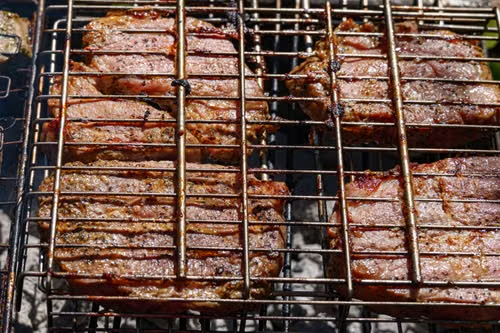
The resting principle doesn’t stop at steak. The same muscle-fiber mechanics apply to pork chops, chicken thighs, lamb chops, and whole roasted birds. A roast chicken pulled from the oven and carved immediately will shed a noticeable amount of liquid; the same bird rested for ten minutes on a rack carves cleaner and tastes juicier. Pork tenderloin, which is easy to overcook to dryness, benefits disproportionately from a five-minute rest because it’s so lean, there’s less fat to compensate for lost moisture.
Even burgers respond to resting, though most people never give them the chance. A burger patty rested for two minutes on the bun before eating holds together better and tastes noticeably more cohesive. The details are smaller with a thin patty, but the physics are identical.
The one protein that doesn’t play by the same rules is fish. Fish muscle is structured differently from mammalian and bird muscle, with shorter, more delicate fibers. Most fish fillets are better served immediately; resting tends to drop the temperature past the point of pleasure without the same moisture-retention benefit. It’s the exception worth knowing.
There is something slightly odd about the fact that the most important step in cooking a great steak happens after the cooking is finished. No heat, no action, just waiting. But the waiting is load-bearing. Skip it, and you are serving yourself a drier version of the meal you actually made.
The next time you pull a steak off the heat and every instinct says to slice it right now, give it five minutes. Put a timer on. Do something else. The steak will be better for it, and so will dinner.
Sources
In-depth food science explanation of moisture redistribution in cooked meat
Testing and explanation of resting times by cut thickness
This article was created with AI assistance and reviewed for clarity and accuracy.