At a certain price point, a steak stops being dinner and starts being a decision. Wagyu beef sits firmly in that second category, and the uncomfortable truth is that most of the cooking advice you’ve applied to every other steak in your life will work against you here.
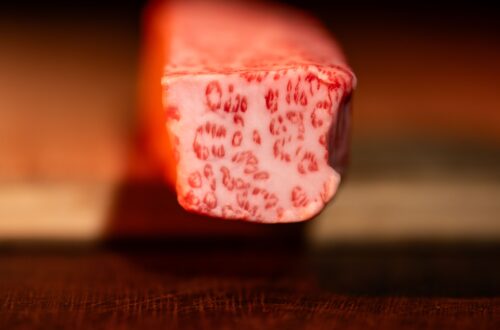
The fat is why. Wagyu cattle, bred for generations to develop dense intramuscular marbling, produce beef with a fat content that can reach two to three times what you’d find in a well-marbled USDA Prime cut. That fat isn’t just flavor. It’s structure. It determines how the meat responds to heat, how quickly it cooks, and how little seasoning it actually needs. Understanding that one fact changes every other decision you’ll make at the stove.
What the Marbling Is Actually Doing
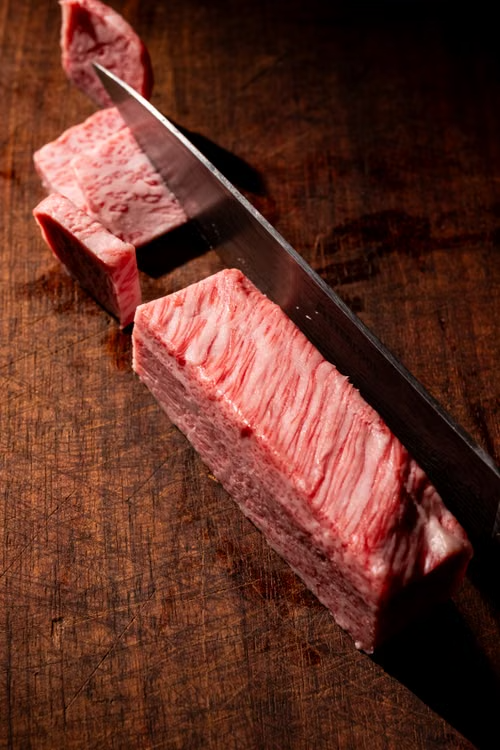
Regular beef fat melts somewhere between 140°F and 160°F. Wagyu fat, specifically the oleic-acid-rich fat in highly marbled Japanese and American Wagyu, melts at a noticeably lower temperature. You can feel this if you let a slice sit in your hand: it begins to yield almost immediately. At the stove, this means the beef is essentially basting itself from the inside out the moment it touches heat.
This is the property that makes Wagyu taste like it does. It also makes it easy to overcook in a way that a thick USDA Choice ribeye would forgive. That ribeye can spend four minutes on a screaming-hot cast iron and emerge medium-rare at the center. Give Wagyu the same treatment, and you’ll render out the very fat that justified the price. The marbling doesn’t survive punishment. It needs a shorter window and lower heat than your instincts will suggest.
Here’s the part most cooks miss when they first handle it: Wagyu is a different animal than a New York strip. Treat it like one and you’ll spend good money on a result that tastes like slightly richer grocery-store beef. The fat has to stay in the meat, not pool in the pan.
The Seasoning Question. Less Than You Think
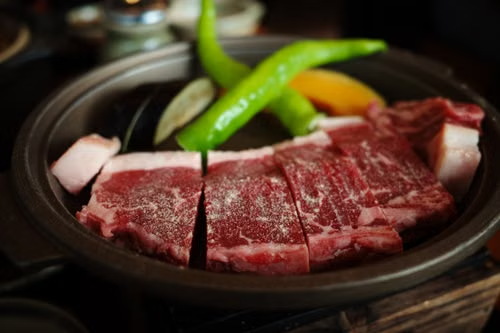
Salt is a cook’s default move, and it’s right for almost every other protein. With Wagyu, the calculation shifts. The fat carries so much intrinsic flavor, buttery, almost sweet, with a richness that coats the palate, that heavy seasoning competes rather than complements.
A pinch of flaky salt. Maybe two. Applied immediately before the meat hits the pan, not thirty minutes ahead. That’s genuinely all most cuts need.
The reason for the timing matters too. Salt draws moisture to the surface. Given time, it pulls liquid that the meat then reabsorbs, a useful technique for thicker, leaner cuts that benefit from a drier exterior before searing. For Wagyu, you don’t need that cycle. The fat content means surface moisture is less of a concern, and the window between raw and overdone is narrow enough that you don’t want the meat sitting out longer than necessary. Season it, sear it, eat it.
Black pepper is optional. Some cooks skip it entirely on A5 cuts, arguing that the bitterness of cracked pepper overrides the fat’s delicate flavor. Others use a light touch. What you want to avoid is the heavy seasoning crust you’d build on a lean cut, the kind that adds texture and flavor to meat that doesn’t have much of its own. Wagyu has its own. Step back and let it.
The Sear: Lower, Faster, and With Very Little Help
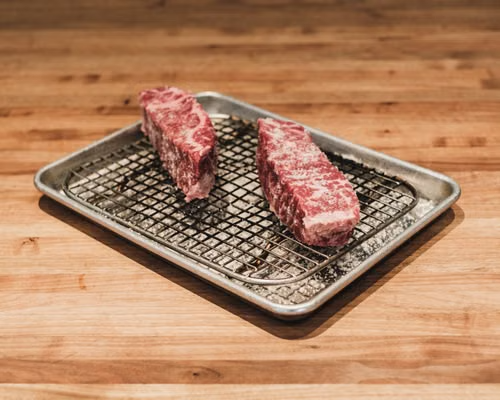
A dry cast iron pan, medium to medium-high heat. No oil. This is where Wagyu departs most sharply from standard steak technique.
The reason for no added oil is practical: Wagyu will release its own fat within seconds of hitting a hot surface. Add cooking oil to that and you end up with more fat in the pan than you can control, and a cook that’s harder to read. Let the beef work with its own rendered fat.
The heat setting is the part that surprises people. For a leaner cut, high heat drives a fast Maillard reaction, the browning that builds flavor, while leaving the interior safely rare. But high heat and Wagyu’s low-melting fat is a combination that moves too fast. You’ll sear the outside while the center climbs past medium before you’ve had a chance to flip. Medium to medium-high gives you a controlled Maillard reaction and keeps the interior where it belongs.
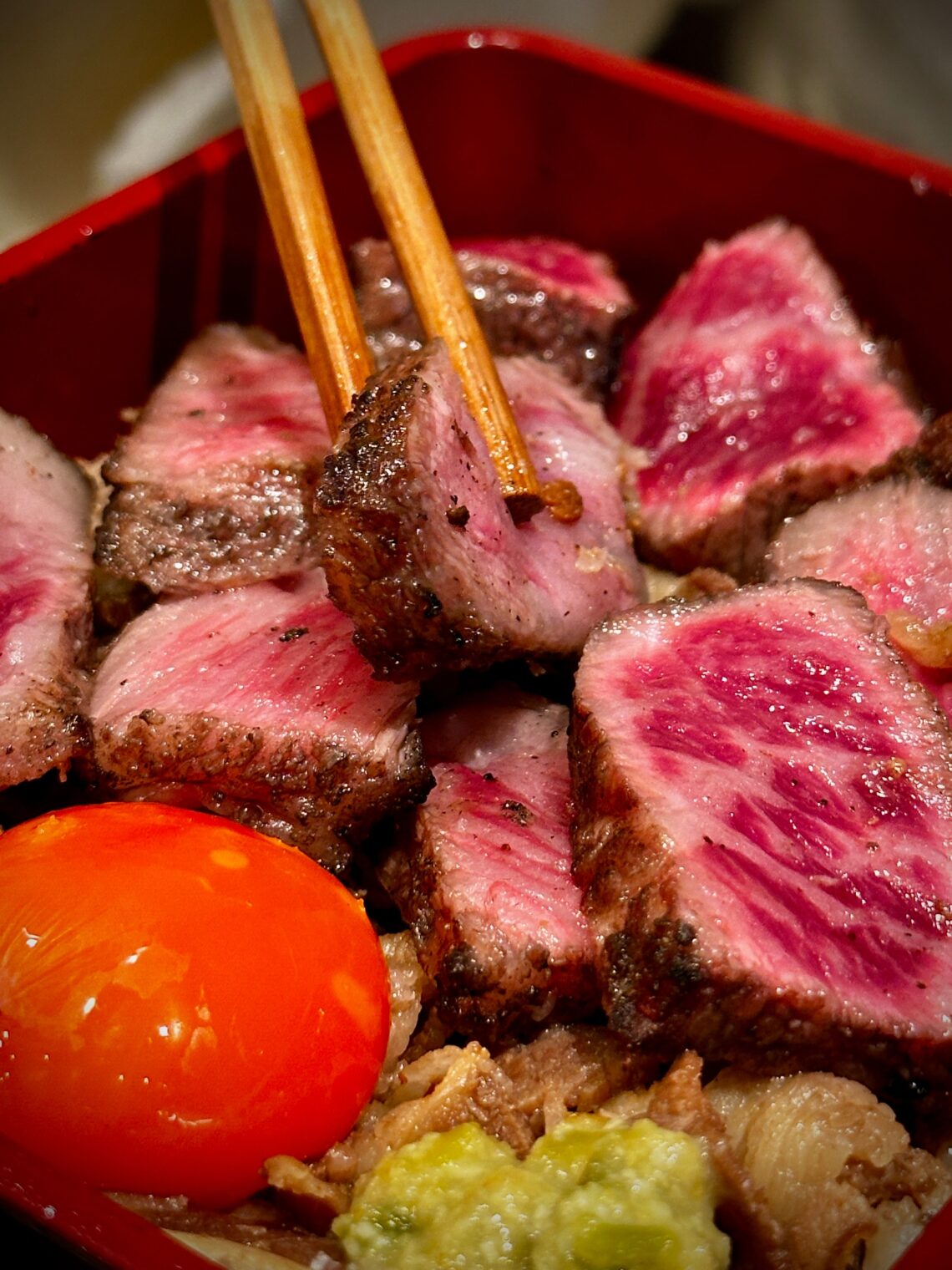
For most Wagyu steaks cut between half an inch and an inch thick, you’re looking at roughly sixty to ninety seconds per side. Maybe less. The visual cue you want is a deep mahogany crust with a small band of unrendered fat at the edge. Pull it before you think it’s done. Carryover heat will finish the job.
One flip. Not multiple. Moving the meat repeatedly drops the pan temperature and interferes with crust development. Set it down, leave it alone, flip once, pull it.
Resting, Slicing, and the Finish
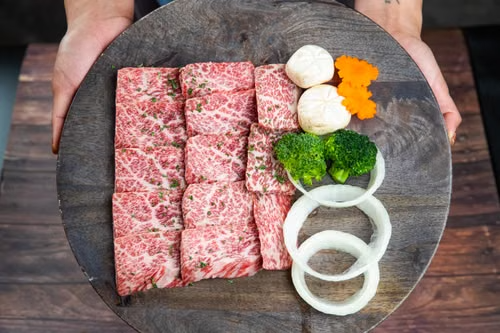
Two minutes of rest is enough for a thin Wagyu cut. The fibers are shorter and the fat distribution is so even that the rest period is less critical than it would be with a thick, lean roast. But skip it entirely and you’ll see the fat pool on the cutting board instead of staying in the meat, worth the two minutes.
Slice against the grain, and slice thin. This is where Wagyu diverges most visibly from the American steak tradition of thick, substantial cuts served as a centerpiece. In Japan, A5 Wagyu is often served in thin slices, sometimes just a few bites per portion, because the richness of the fat makes large portions unnecessary and, honestly, overwhelming. A few bites eaten slowly will teach you more about what the beef actually tastes like than a six-ounce portion eaten at normal pace.
The serving surface matters more than people expect. A warm plate keeps the fat from seizing. A cold plate will firm up the rendered fat before the first bite, which changes the texture and mutes the flavor. Thirty seconds in a low oven or a quick rinse with hot water and a dry towel is enough.
No sauce. Wagyu served with a heavy sauce is a genuine waste, because the flavor the fat delivers is subtle and layered, and most sauces will cover it completely. If you want contrast, a small amount of flaky salt over the sliced meat is the only finish that adds without taking away.
Not all Wagyu is identical, and the approach above scales with marbling level. American Wagyu, which is typically a crossbreed of Japanese Wagyu and Angus cattle, tends to have less extreme marbling than Japanese A4 or A5 cuts. It’s more forgiving at the stove. You can apply slightly more heat, season a little more aggressively, and cook it closer to the way you’d handle a prime American ribeye.
Full Japanese A5 Wagyu demands the most care and the most restraint. The principles above were written with that end of the spectrum in mind, but they apply in proportion across the range. The more marbled the beef, the lower the heat, the lighter the seasoning, and the shorter the cook.
The single most useful thing you can do with any Wagyu, regardless of grade, is slow down. This is not meat that rewards urgency. The fat needs time to warm and melt evenly, not to vaporize under a blast of heat. A slower, more attentive cook is a better cook here, and the result will taste like it.
If you’ve ever cooked Wagyu and thought it didn’t live up to the reputation, the pan was probably too hot.
Sources
Background on Wagyu cattle breeds, marbling grades, and Japanese vs. American production
Background on the browning chemistry referenced in the searing section
This article was created with AI assistance and reviewed for clarity and accuracy.