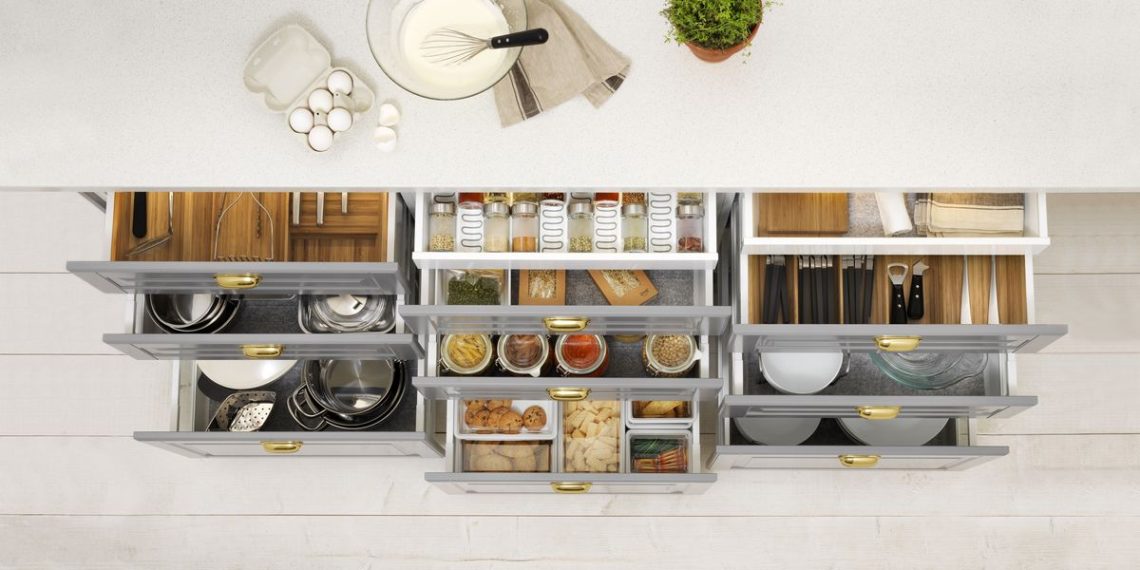
Stress in the kitchen rarely comes from the food itself. It comes from rushing, searching, bumping into clutter, and feeling behind before cooking even starts. I feel the difference immediately between a kitchen that supports me and one that quietly works against me. Organization does not remove effort from cooking, but it removes unnecessary pressure that makes cooking feel harder than it should.
A stress-free kitchen is not about perfection or minimalism. It is about alignment between space and behavior. When the kitchen matches how I actually cook, stress fades into the background. Tasks flow naturally, decisions feel lighter, and cooking becomes something I look forward to instead of something I rush through.
Stress Starts With Visual Noise
Visual clutter creates mental clutter, especially in a space where attention matters. Crowded counters, overflowing shelves, and mismatched storage compete for attention even when I am focused on cooking. The brain processes all of it, whether I want it to or not. That background noise builds tension before the first ingredient is touched.
Reducing visual noise immediately lowers stress. Clear surfaces and orderly storage allow my focus to stay on the food instead of the surroundings. The kitchen feels calmer, which makes cooking feel more manageable even on busy days.
Clear Counters Create Mental Breathing Room
Counter space affects stress levels more than most people realize. When counters are full, every task begins with moving something out of the way. That constant rearranging creates irritation that builds quickly. I notice impatience creeping in long before cooking becomes complicated.
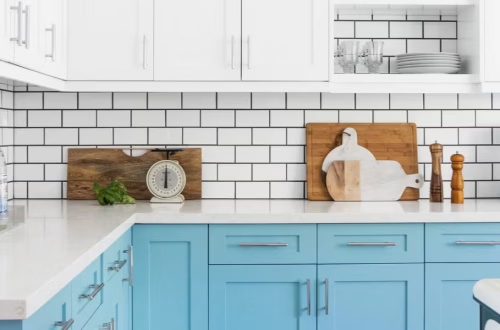
Clear counters provide breathing room. Prep happens smoothly without interruption. The kitchen feels cooperative rather than crowded, which reduces stress without any conscious effort.
Organization Reduces Decision Fatigue
Cooking involves hundreds of small decisions. Where is the knife, which pan should I use, where did that spice go. When items are disorganized, each decision takes longer and feels heavier. That mental load adds stress even during simple meals.
An organized kitchen removes those decisions. Items live where they are expected to be. My hands move automatically, and the brain stays focused on flavor and timing instead of logistics.
Storage Placement Shapes Emotional Ease
Stress increases when frequently used items are hard to reach. Bending, stretching, or digging through clutter feels small but accumulates frustration. I notice tension rise when daily tools are buried behind rarely used items.
Placing everyday tools within easy reach changes the emotional tone of cooking. Movements feel smooth and intentional. The kitchen feels supportive rather than demanding, which lowers stress naturally.
Grouping Items by Task Calms the Process
Scattered tools create constant interruptions. Searching multiple drawers for items that belong together breaks concentration. I organize tools based on how they are used rather than how they look.
Prep tools stay together, cooking tools remain near the stove, and cleaning supplies live near the sink. This grouping creates flow. Cooking feels calmer because everything needed for a task is already waiting nearby.
Simplifying Drawers Prevents Hidden Stress
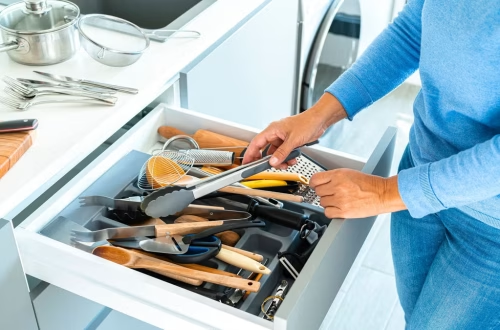
Overfilled drawers are a quiet source of stress. They stick, overflow, and hide items under layers of clutter. Each interaction feels slightly irritating. Over time, those moments add up.
Simplified drawers eliminate friction. Fewer items mean faster access and easier cleanup. Stress decreases because drawers function smoothly instead of fighting back.
Visibility Lowers Anxiety Around Ingredients
Hidden ingredients create uncertainty. Forgetting what is available leads to rushed substitutions or unnecessary shopping trips. That uncertainty adds stress before cooking even begins.
Visible storage restores confidence. Seeing ingredients clearly makes planning easier and faster. Cooking feels grounded instead of reactive, which keeps stress levels low.
Labeled Storage Removes Hesitation
Hesitation slows momentum. Opening containers to confirm contents may seem harmless, but it interrupts flow repeatedly. Labels remove that hesitation.
Clear labeling speeds up decisions and keeps the process moving. Cooking feels smoother because nothing requires double-checking. That consistency creates a calm rhythm throughout the kitchen.
Vertical Storage Protects Work Surfaces
Cluttered surfaces increase stress by limiting movement. Vertical storage keeps essentials accessible without crowding counters. I rely on shelves and hooks to preserve workspace.
This setup keeps counters ready for action. Tasks begin immediately without clearing space first. Stress drops because the kitchen feels prepared rather than obstructed.
One-Step Access Keeps Momentum Steady
Stress often appears when tasks require extra steps. Moving one item to reach another interrupts focus. I organize the kitchen so frequently used items can be accessed in one motion.
This simplicity keeps momentum intact. Cooking feels fluid instead of choppy. Stress fades because the environment supports continuous movement.
A Calm Fridge Makes Cooking Easier
The refrigerator sets the tone for meal prep. A cluttered fridge creates hesitation and frustration. I organize it so commonly used items sit at eye level, with clear zones for categories.
This structure reduces searching and prevents overwhelm. I see what I need immediately. Cooking begins with clarity instead of confusion.
Pantry Order Reduces Last-Minute Pressure
Disorganized pantries cause last-minute stress. Missing ingredients and forgotten items derail plans quickly. I divide pantry space into clear, functional zones.
This structure speeds up both cooking and planning. I know what is available before starting. Stress decreases because surprises are eliminated.
Consistent Containers Create Visual Calm
Mismatched containers create visual and physical chaos. Lids disappear, stacks topple, and storage feels unstable. I use consistent container sizes whenever possible.
This consistency simplifies storage and cleanup. Everything fits neatly without trial and error. The kitchen feels orderly, which reduces stress instantly.
Cleaning Becomes Easier in an Organized Kitchen
Mess feels more overwhelming in disorganized spaces. When items lack clear homes, cleaning feels endless. Organization makes cleaning manageable.
I notice that clean-as-you-go habits form naturally. Putting things away feels easy rather than burdensome. Stress drops because mess never gets out of control.
Designated Drop Zones Prevent Chaos
Clutter often starts with items that have no temporary home. Mail, groceries, and bags land on counters and spread quickly. I create specific drop zones to catch these items.
These zones prevent clutter from taking over. Clearing them takes minutes instead of hours. Stress stays low because mess never gains momentum.
Reduced Friction Improves Emotional State
Every small obstacle adds emotional friction. Over time, friction turns into stress. Organization removes these obstacles quietly.
Tasks feel lighter because they require less effort. Cooking becomes more enjoyable because the environment cooperates. Stress fades as friction disappears.
Organization Supports Mindful Cooking
Mindful cooking requires presence. Clutter pulls attention away from the process. An organized kitchen allows focus to stay on aromas, textures, and timing.
I feel more connected to cooking in a calm space. Adjustments feel intuitive rather than rushed. Stress-free cooking becomes possible because attention is not divided.
Stress-Free Cooking Builds Confidence
Confidence grows when cooking feels manageable. Organization creates conditions for consistent success. Fewer mistakes happen when the environment supports the process.
That confidence reduces stress further. Cooking stops feeling like a test and starts feeling expressive. The kitchen becomes a place of ease rather than tension.
Organization Adapts to Real Life
Stress-free kitchens reflect real routines. I organize based on how I actually cook, not idealized versions of myself. This realism keeps systems sustainable.
The kitchen adapts to busy days and relaxed ones alike. Stress stays low because expectations match reality. Organization supports daily life rather than fighting it.
Small Changes Create Lasting Calm
Stress relief does not require dramatic overhauls. Small, intentional changes create lasting calm. Each adjustment reinforces the next.
Over time, the kitchen becomes self-regulating. Order maintains itself with minimal effort. Stress-free cooking becomes the default rather than the exception.
Final Thoughts
Organizing your kitchen for stress-free cooking is about reducing friction, not chasing perfection. Clear placement, visible storage, and logical groupings support calm and focus. These changes remove unnecessary pressure from daily cooking.
A well-organized kitchen creates emotional ease as much as physical efficiency. Cooking becomes smoother, decisions feel lighter, and stress fades into the background. When the kitchen supports you, cooking becomes a source of comfort rather than tension.