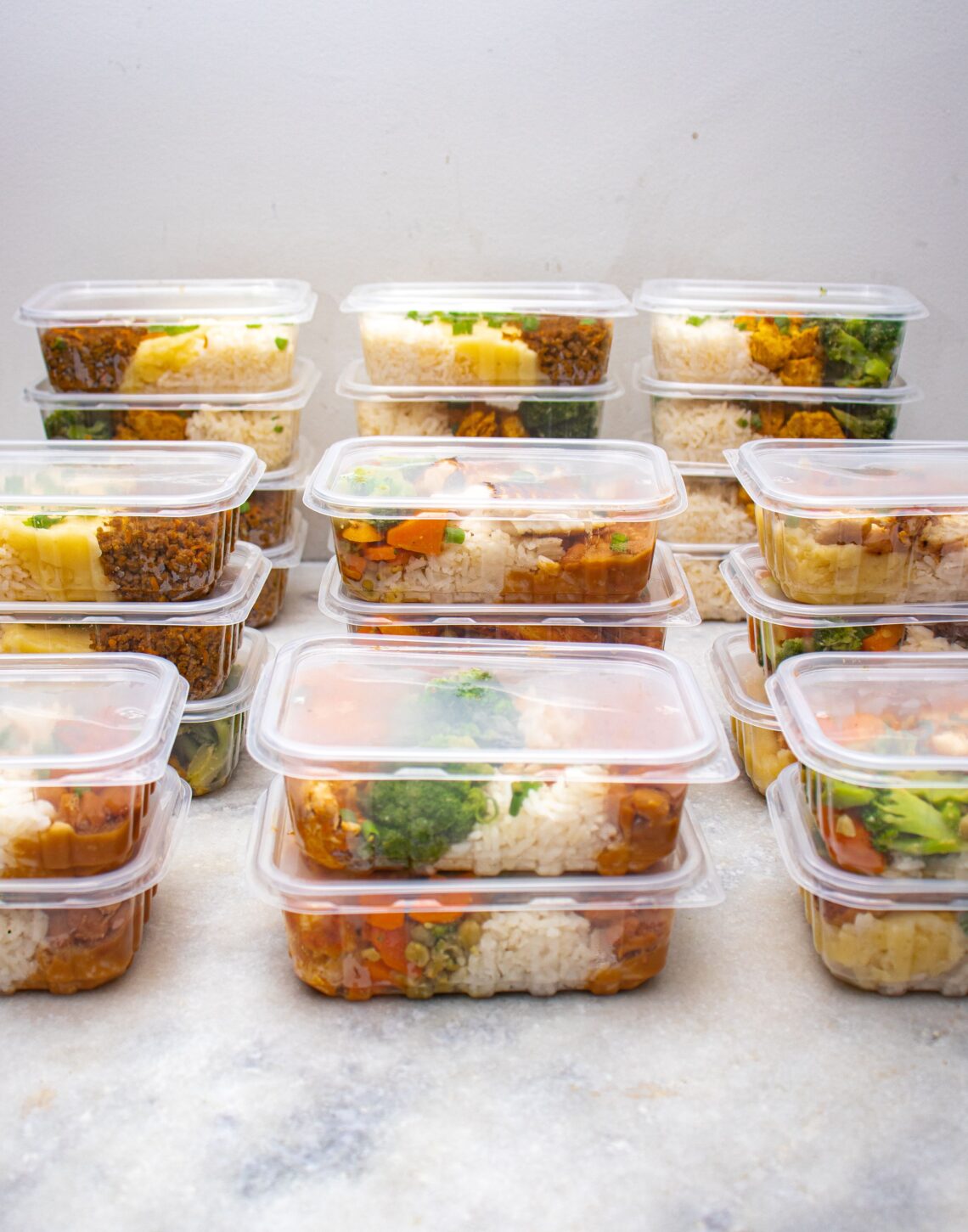
Of all the reasons weeknight cooking falls apart, the most common one has nothing to do with time or skill. It’s that the food you made on Sunday is either gone by Tuesday or quietly dying in the back of the refrigerator by Wednesday. Neither outcome is a cooking failure. It’s a systems failure, and the fix is simpler than most people expect.
Meal prep isn’t a single act. It’s a chain: cook, cool, store, reheat. Break any link,k and the whole thing unravels. Most home cooks focus almost entirely on the cooking part and give the rest about thirty seconds of thought. That’s where the week falls apart in the container, not the pan.
What You’re Actually Preserving
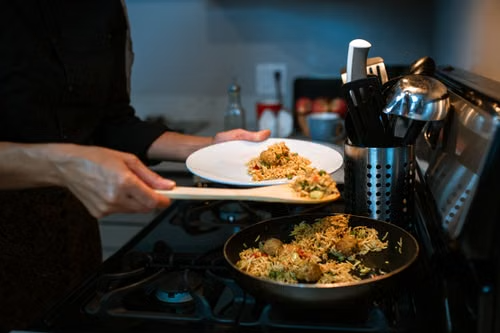
When food comes off the stove, it doesn’t stop changing. Heat trapped inside a lidded container keeps cooking the food, which softens pasta, toughens proteins, and pulls moisture out of vegetables. This is why reheated chicken breast so often ends up rubbery and why rice turns gluey after a day in the fridge:ge the food kept cooking in its own steam long after dinner was done.
The fix is cooling. Fast cooling. Spread grains on a sheet pan before refrigerating, ing and they cool in ten minutes instead of two hours. Divide a big pot of soup into two shallow containers rather than one deep one. The goal is to get the internal temperature down below 40°F within a couple of hours, and shallow containers do that far more efficiently than deep ones.
And here’s the part most people skip entirely: some foods need to be stored separately from their sauces. Pasta mixed with marinara will absorb that liquid overnight and turn into one dense, gummy mass. Keep the two apart, combine them at reheating, and both hold their texture through day four.
The Container Question Nobody Wants to Answer
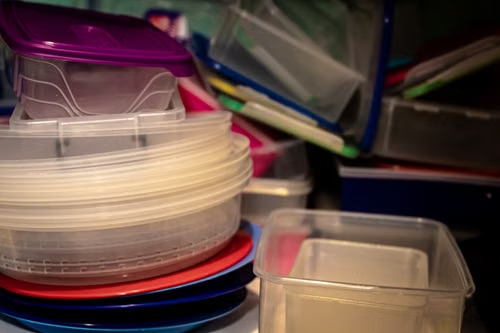
Glass or plastic? It depends on what you’re storing.
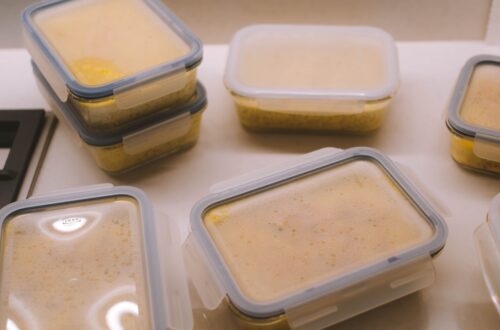
Glass holds up better in the oven, doesn’t absorb odors, and doesn’t stain when you run tomato-based sauces through it for the fifteenth time. For anything you plan to reheat in the oven, a baked pasta, a casserole, a grain dish, glass is the right call. Plastic containers with airtight lids are lighter, stackable, and better for soups and anything liquid, because they’re far less likely to shatter if you knock one off the counter at 7 a.m.
One container worth having regardless of material: a wide, flat one. Tall, narrow containers are the enemy of good storage. They trap heat, make it hard to see what’s inside, and give you no surface area for even reheating. A wide, shallow container cools faster, reheats more evenly in the microwave, and stacks cleanly. That last detail matters more than it sounds: a refrigerator where containers stack is a refrigerator you can actually see into, which means you actually use what’s in there.
Label everything. This is the step that feels fussy until the Tuesday when you can’t tell if that container holds chicken stock from last week or the white bean soup from yesterday. A strip of masking tape and a marker costs nothing and saves the guessing game entirely.
The most effective meal prep doesn’t try to cook seven complete dinners in advance. It builds components- cooked grains, roasted vegetables, a protein or two- and assembles them differently each night. Same ingredients, different dinners. This is how you avoid the Tuesday problem, where everyone is already tired of whatever you made on Sunday.
Cook a big batch of farro or brown rice, and it becomes a grain bowl on Monday, a stir-fry base on Wednesday, and a warm salad on Friday. Roast a sheet pan of mixed vegetables,s and they work alongside grilled chicken one night, tucked into a quesadilla the next, and stirred into a frittata by the end of the week. The components don’t get old because they keep changing shape.
Proteins are the one place where full cooking pays off upfront. A whole roasted chicken, pulled apart and stored in a shallow container with a little of its own juices, stays moist for four to five days and goes into almost anything. Ground meat browned with aromatics, onion, garlic, and a little tomato paste, is the backbone of tacos, pasta sauce, stuffed peppers, and shakshuka without much additional work. Cook it once. Build from it three times.
The Freezer Is a Different Problem
Most people treat the freezer as a place where food goes to wait. It’s better understood as a place where food goes to stop. Soup, chili, broth, beans, cooked grains, and unbaked casseroles all freeze well. Cooked pasta, potatoes, and anything with a cream-based sauce generally do not; the texture shifts enough on thawing to be disappointing.
The biggest freezer mistake isn’t storing the wrong things. It’s storing food warm. Putting hot food directly into the freezer raises the internal temperature of everything around it, which causes partial thawing and refreezing in neighboring containers, exactly what you don’t want. Cool food to room temperature first, then refrigerate, then freeze if you’re going beyond four or five days. That sequence matters.
Freeze in portions you’ll actually use. A gallon bag of frozen chili sounds efficient until you realize you need to thaw the whole thing for two people on a Tuesday night. Freeze in two-serving portions, and you have flexibility. Flexibility is what turns meal prep from a Sunday obligation into a system you’ll actually keep using.
One last thing worth knowing: freezer burn isn’t dangerous, but it is a quality problem caused by air exposure. Press plastic wrap directly against the surface of soups and sauces before sealing the container, and you cut down on the ice crystals that dull flavor over time. A detail, but the kind that makes last month’s soup taste like it was made this week.
The cooks who eat well on a Thursday night aren’t necessarily the ones who spent the most time in the kitchen on Sunday. They’re the ones who put the food away correctly when they were done.
Sources
Federal guidelines on refrigeration temperatures, cooling times, and food safety thresholds
Government reference for recommended refrigerator and freezer storage times by food type
This article was created with AI assistance and reviewed for clarity and accuracy.